Why working from home makes you so tired
You did not commute, you barely left the chair, and you are more tired than on an office day. It is not the hours. The home day kept the tiring parts of work and lost the parts that used to recover you.
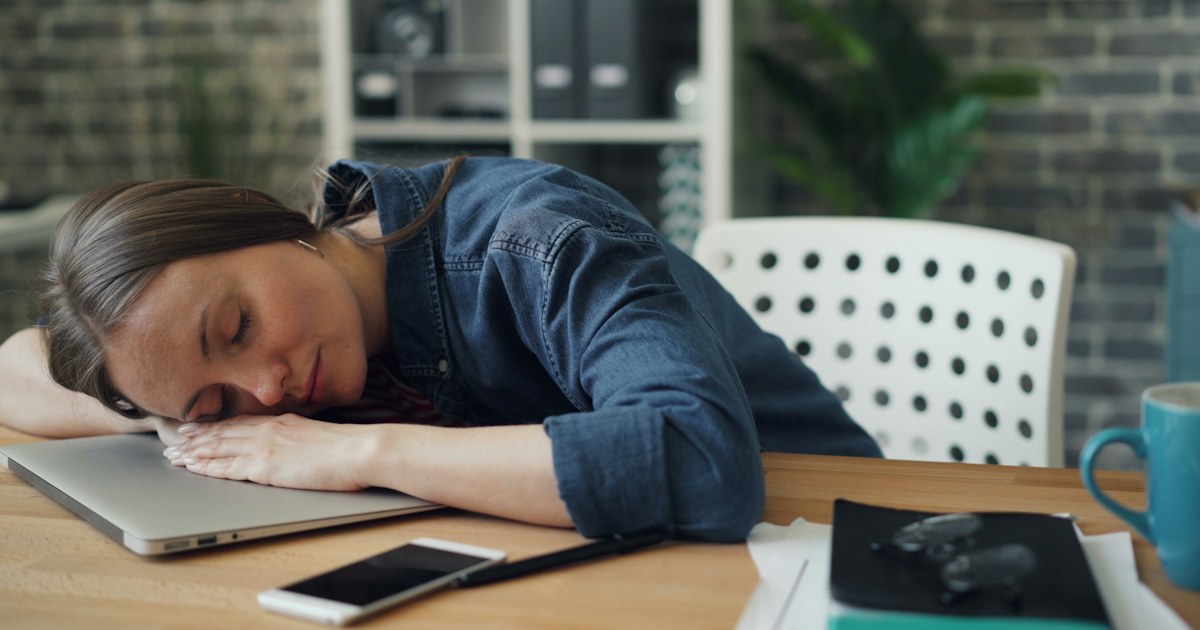
It is half five. You have not been anywhere. No train, no walk across town, no stairs. You sat in one chair for most of the day and the furthest you went was the kettle.
And you are more tired than you ever were after a day in the office.
That does not add up, so the usual conclusion is that something is wrong with you. You have got lazy. You need more coffee, or more discipline, or an earlier night. You did less, so why is there less of you left?
Because tiredness was never only about how much you did. It is about how much you did against how much you recovered, and the home day quietly changed both sides of that.
The office was full of rest nobody planned
Think about what a day in the office actually contained, apart from work.
The walk from the station. The walk to the meeting room, and back. Standing in the kitchen while somebody finished with the microwave. The ten minutes when the next meeting started late. The trip home, which was annoying and also the one part of the day when nobody could ask you anything.
None of that was designed as rest. All of it worked as rest. You stood up, you moved, you looked at something further away than a screen, and the day had a clear end.
At home all of that is gone, and nothing replaced it. What is left is the work, in its most tiring form, one block after another in the same chair.
The camera is doing more of it than you think
The most direct evidence is about video calls.
Kristen Shockley and colleagues ran a four week field experiment with 103 remote employees, published in the Journal of Applied Psychology in 2021. For two weeks people kept their camera on in meetings, and for two weeks they kept it off, in a random order. Across 1,408 daily reports, the camera days were more fatiguing. The researchers used calendar data to account for how many meetings people had and how long they lasted, so this was not simply busier days feeling worse. The effect was stronger for women and for people who were newer to the organisation, which fits the explanation the authors gave: being on camera means managing how you come across, all the time, and that takes effort.
Jeremy Bailenson at Stanford has made a similar argument from the other direction, in Technology, Mind, and Behavior in 2021. He proposes four reasons video calls wear people out: unnaturally close eye contact, the extra work of reading people through a small window, watching your own face for hours, and sitting pinned in place so you stay in frame. It is worth being clear that his paper is a reasoned argument, not an experiment. But it describes the office day in reverse. Everything the corridor gave you, the camera takes away.
You did not do more work at home. You did the same work with the recovery taken out.
Sitting still is tiring in its own right
The second thing is the chair.
It feels as though sitting should be restful. For a short while it is. Stretched over a whole day it starts to work the other way.
Wennberg and colleagues tested this in a small randomised trial published in BMJ Open in 2016. The same 19 adults spent two long days in a lab, once sitting straight through and once getting up for three minutes of light walking every half hour. On the walking day they reported less fatigue, at four hours and again at seven. The trial was small, it took place in a lab rather than at a kitchen table, and everyone in it was aged 45 to 75 and overweight, so nobody should treat it as a precise prescription. But three minutes is a very small price, and the direction is the one you would expect.
In the office the walking happened by itself. At home you have to choose it, and on a busy day nobody chooses it.
Breaks help, and nothing at home makes you take them
The third thing is breaks.
Albulescu and colleagues pooled the research on micro breaks, meaning breaks of ten minutes or less, in a 2022 meta analysis in PLOS ONE. Across 22 study samples and over 2,000 people, short breaks gave a small but real increase in energy and a small decrease in fatigue. They did not reliably improve how much people got done, which is worth knowing too. Breaks are not a trick for output. They are how you get to the end of the day with something left.
The authors also note that recovering from the most draining work probably needs longer than ten minutes. A day of back to back calls is exactly that kind of work.
And then the day does not end
The last piece is the finish.
A large study of more than three million people’s meeting and email data, run at the start of the pandemic by Evan DeFilippis and colleagues and published by the National Bureau of Economic Research in 2020, found the span of the workday grew by about 48 minutes after people went home. It is a working paper, not a peer reviewed one, and it measured the time from the first email to the last, which may mean the day was spread out rather than longer. But spread out is its own problem. A day that ends whenever the last message is answered never quite ends.
Sabine Sonnentag and Charlotte Fritz, reviewing years of research on recovery in the Journal of Organizational Behavior in 2015, found the same pattern again and again: people who cannot mentally switch off from work in their free time show more strain and poorer wellbeing. The commute used to do some of that switching for you. Now nothing does, which is why switching off from work at home takes an ending you build on purpose.
What to do instead
Not a programme. Three small rules, in order of how much they ask of you.
- Stand up when a call ends. Before the next call, before the next message. Out of the chair, ideally out of the room, for a few minutes. This one move gives back the walk between meeting rooms.
- Take one call a day with the camera off. Pick a call where you are mostly listening, and ask if it is fine. In the Shockley study it was the camera, not the meeting, that did the damage.
- Give the day an end you can see. A time you stop, and something you do at it. Closing the laptop and putting it away counts. We wrote about why the office drew those edges for you, and why a home day needs them drawn on purpose.
If you only do one, do the first. It costs nothing, nobody has to agree to it, and it puts back the thing the office gave you for free.
If the tiredness holds on weekends and holidays too, or it has gone on for weeks, it is worth taking to a doctor rather than to a blog. That is a different problem, and a real one.
The one thing to try tomorrow
Every time a call ends, stand up before you do anything else.
Not a workout. Not a walk round the block, unless you want one. Just out of the chair for a few minutes, so the next thing starts with you having moved.
Flowdayz is about finding the few small things like this that actually change your day at home, out of all the advice there is. Take the two minute workday check to see which ones matter most for yours.
The day at home will never have a corridor in it. It can still have the minutes the corridor used to give you.
Questions people ask
Why am I so tired after working from home all day?
Usually because the home day is made of the tiring parts of work with the recovering parts removed. Back to back calls, often on camera, in the same chair, with no walk between them and no commute to mark the end. Each of those has research behind it as a source of fatigue. None of them is a sign that something is wrong with you.
Why am I more tired working from home than in the office?
The office day contained recovery nobody planned. Walking to a meeting room, standing in a queue, the trip home. At home those disappear, so you sit still for longer, look at your own face on a screen more, and have nothing that tells you the day is over. You may be doing less physical work and still be getting less rest.
Is Zoom fatigue real?
There is decent evidence for it. Shockley and colleagues ran a four week field experiment with 103 remote employees, switching cameras on and off by design, and found camera days were more fatiguing even after controlling for the number and length of meetings. The effect was stronger for women and for people newer to the organisation. Jeremy Bailenson at Stanford has proposed four reasons video calls tire people, including close up eye contact and watching yourself, though that paper is a theoretical argument rather than a test.
Should I turn my camera off in meetings to feel less tired?
For some calls it is worth asking. In the Shockley study the fatigue came from the camera itself, not from the meetings. Many teams are fine with cameras off for internal calls, for listening heavy meetings or for one call a day. Ask first if your team expects them on, and keep them on where it genuinely matters.
How often should I take a break when working from home?
There is no single proven schedule. A 2022 meta analysis in PLOS ONE found that breaks of ten minutes or less give a small boost to energy and a small drop in fatigue. A small trial found three minutes of light walking every thirty minutes reduced fatigue compared with sitting still. A practical rule is to stand up between every call, and not to let more than an hour or so pass without moving.
When is tiredness more than a work from home problem?
When it does not lift. If you are just as exhausted on weekends and holidays, if it has lasted for weeks, or if it comes with poor sleep, low mood or other changes, it is worth talking to a doctor. Nothing in this post replaces that conversation.
One small thing a week.
A short email with one idea for your workday at home, and how sure the science is. No noise. Leave any time.