4 September 2026 · 6 min read
The rest was never the problem
Feeling guilty when you rest is common and now measurable. Leisure guilt turns up in about one free moment in seven, and it thins out the benefit the break was for.
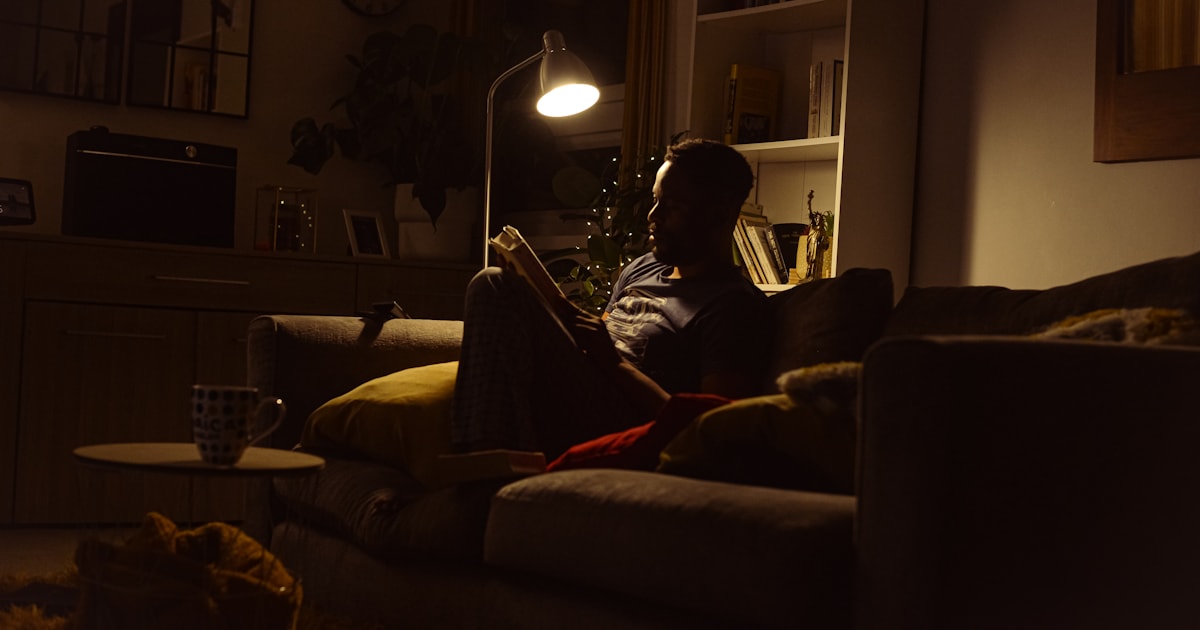
You sat down at nine. Something on the screen, the good kind, the thing you had actually been meaning to get to. And you watched about a third of it while a second track ran underneath, the one doing sums. The washing still in the machine. The message you did not send. The fact that this is the evening now, and you have not really done anything with it.
By half ten you went to bed no more rested than you sat down.
The rest was there the whole time. You just spent it apologising for it.
The usual advice is to switch off better
The standard fix for this is a routine. A wind down. Put the phone in another room, run a bath, light the candle, give yourself permission. Or the harder version: you are addicted to being productive, your sense of worth has fused to output, and this is a deeper thing that needs proper work.
Some of that is true for some people. None of it is the thing actually in the room, which is smaller and more specific. It is guilt, sitting directly on top of the leisure, quietly taking the point out of it.
Somebody measured it
Hyunjin Koo and colleagues spent four studies on exactly this feeling, published as Leisure Guilt in Personality and Social Psychology Bulletin in 2026. They define it plainly, as the feeling of guilt or unease about spending time leisurely rather than productively.
First they built a way to measure it. Across three studies they developed and validated the Leisure Guilt Proneness scale, and reported it was internally consistent, stable over time, and predictive of poorer leisure experiences and lower well-being.
Then they went looking for it in ordinary life. In an experience sampling study, people were pinged during the day and asked what they were doing and how they felt. On average, people experienced leisure guilt during 14 percent of leisure occasions, with higher rates among women, individuals with lower socioeconomic status, and younger adults. Call it one free moment in seven, spent feeling bad about having it.
And one more pattern, which is the useful one. Leisure guilt was more common during solitary than social leisure.
The finding that matters most is quieter. Individuals high in leisure guilt proneness reported experiencing reduced psychological benefits from leisure. The rest still happened. It just did less. The authors' own summary is that leisure guilt is a potential barrier to the psychological benefits of leisure and daily well-being.
Three limits, because they matter. This is a new construct and a new scale, so it will be tested and revised by other people. The well-being link is a correlation: they measured how prone people were and measured how they felt, they did not assign anyone to feel guilty, so the causal arrow is not nailed down. And experience sampling is self-report. What is solid is that the feeling is common, it has a recognisable shape, and it travels with getting less back from your own time off. How large that effect is on any particular Tuesday is not something the paper can tell you.
It is not the only study pointing this way. In 2021, Gabriela Tonietto, Selin Malkoc, Rebecca Walker Reczek and Michael Norton ran four studies and found that the more the participants believed leisure to be wasteful, the less they enjoyed leisure activities, reported in the Journal of Experimental Social Psychology. People who held that belief more strongly also reported lower happiness and more depression, anxiety and stress. That is a belief about leisure in general rather than guilt in a single moment, but it lands in the same place.
Why it is worse when you are on your own
A dinner with friends comes with a reason already bolted on. You are keeping up a relationship, which is a sensible use of an evening, so the ledger lets it through without much argument.
An hour alone with a book has no such cover. Nobody is being maintained. Nothing is being built. So the same internal accountant that waved the dinner through flags the book as time you will have to justify later.
This is a problem, because solitary downtime is often the kind that restores the most, and it is usually the first thing to get cut when a week gets full. The guilt is heaviest on precisely the rest you can least afford to lose.
What to do with this
Name it as the thing, not the gap. "I am watching this." Not "I should be doing the other thing." A thing has its own value. A gap between tasks is defined entirely by the tasks on either side of it, so of course it feels like a debt.
Protect the time alone on purpose. Put it somewhere specific rather than hoping it turns up. The walk without the podcast. The half hour before anyone else is awake. If the guilt concentrates on solitary leisure, then solitary leisure is the part that needs defending, not the part to feel sheepish about.
Let one small thing count. The ten minutes with the coffee outside. The chapter. The walk to nowhere. Notice that it happened and that it was good, rather than letting it dissolve because it was not on any list. This is also how you learn which small things actually work for you, and enjoyment is a better predictor of what you keep doing than usefulness is.
An hour off is not time away from work. It is an hour, and it was already yours.
Flowdayz is a feel good app. It surfaces a lot of small things you might try, a walk, a few slow breaths, a song with nothing else going on, then notices which ones you kept and which ones you said felt good, and builds the plan around those rather than adding to it. After a kept action it asks one question, whether that felt good, and the answer is the whole point. It is how the small thing gets recorded as something that counted rather than lost. That is what /start is for.
The evening was already yours. Nobody was going to take it back and hand you a better one.
The only thing left to do with it is be in it.
Questions people actually ask
- Why do I feel guilty when I rest?
- Because rest reads as the absence of something productive rather than as a thing in itself, so the mind keeps running the ledger. Researchers call it leisure guilt, and a 2026 study in Personality and Social Psychology Bulletin found it common, showing up in about 14 percent of people's leisure occasions. It was more frequent for women, younger adults and people of lower socioeconomic status, and it is not a discipline failure.
- Is leisure guilt a real thing or am I imagining it?
- It is a defined construct with a validated measure. Koo and colleagues built the Leisure Guilt Proneness scale across three studies and reported it was internally consistent and stable over time, then used experience sampling to catch the feeling in daily life. On average people felt leisure guilt during about 14 percent of leisure occasions. It is measurable, and having it does not make you unusual.
- Does feeling guilty actually make rest less effective?
- The evidence points that way. In the 2026 study, people high in leisure guilt proneness reported reduced psychological benefits from leisure, meaning the same break did less for them. A separate 2021 study found the more people saw leisure as wasteful, the less they enjoyed it. The link is correlational rather than proven cause, but the direction is consistent.
- How do I stop feeling guilty when I relax?
- Two things help more than forcing it. Name the activity as what you are doing, not as time away from work, because a thing has a value and a gap does not. And protect solitary downtime on purpose, since that is where the guilt concentrates and it is also the kind most people cut first. You are not aiming to feel nothing. You are aiming to be in the hour you already took.
- Why do I feel more guilty relaxing alone than with other people?
- Because solitary leisure has no external reason attached. A dinner with friends counts as keeping up a relationship, so it reads as useful. An hour with a book or a bath does not, so the ledger flags it. The 2026 leisure guilt study found exactly this pattern, with guilt more common during solitary than social leisure. The time alone is not more indulgent. It just has no cover story.
Keep reading
You will keep the one you enjoy
September is the other resolution season, and the list gets picked from the wrong column. Usefulness predicts what you start. Enjoyment predicts what you keep.
Read itA habit tracker without streaks still has a rule for the day you miss
Habit trackers without streaks replaced the chain with four different rules for a missed day. Three of them still charge you. The research says none should.
Read it
- rest
- leisure
- wellbeing
- motivation
Make every day your best day.
Flowdayz is a feel good app. You learn what actually makes you feel good, usually the smallest things, and get there every day, around the life you already have.