Video guidesThe shape of the day
How to structure your day when you start working from home
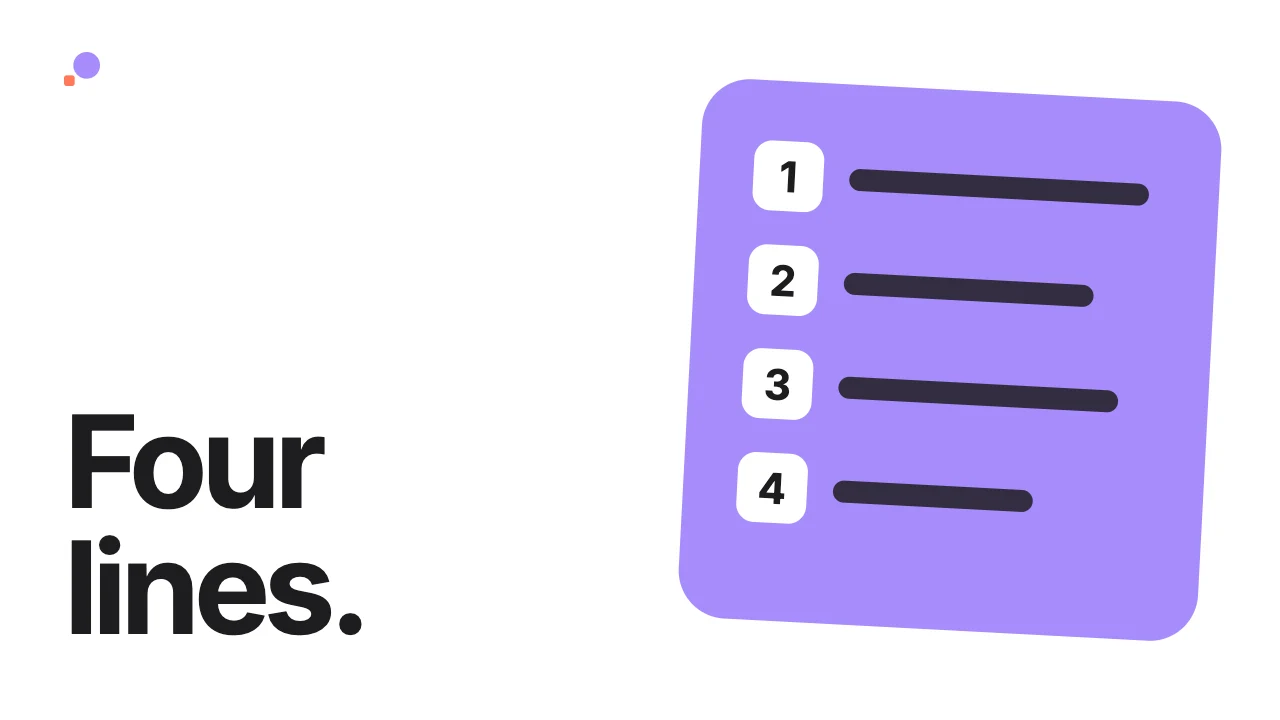
The office gave your day a shape you never had to plan. At home nobody gave you the manual, so here is its first page, four lines written before your first message.
Find your two
The free two minute check names the two parts of your workday that matter most.
Chapters
 Read the full guideHow to structure your day when you start working from homeEvery source, the details, and the one thing to try tomorrow.
The research
- DeFilippis and colleagues, 2022, Humanities and Social Sciences Communications
- Verplanken and Roy, 2016, Journal of Environmental Psychology
- Lally and colleagues, 2010, European Journal of Social Psychology
- Buehler, Griffin and Ross, 1994, Journal of Personality and Social Psychology
- Gollwitzer and Sheeran, 2006, Advances in Experimental Social Psychology
- Sianoja and colleagues, 2018, Journal of Occupational Health Psychology
- Aeon, Faber and Panaccio, 2021, PLOS ONE
Read the transcript
The third week
It’s your third week working from home. The laptop opens in bed at 7:40 am, because a message came in. Lunch happens over the keyboard. At 9 pm you answer one more thing. And at 10 pm, you can’t say what the day was.
Nobody gave you a manual for this. You got a laptop and a login. Not a day. Here’s what this video covers for you: what the office did, why the first months matter, and four lines for your day.
What the office did for you
You didn’t lose your discipline when you left the office. You lost the structure it was quietly giving you. The commute started and ended the day. Lunch happened because people stood up. Walking to meetings was a break. And the building closed.
At home, those edges are gone. When offices emptied in 2020, a study of more than three million people found the span from first email or meeting to last grew about 48 minutes. That’s the span, not the hours. But a day with no edges feels long, even when it isn’t full.
Why the first months matter
Here’s the good news if you’ve just started. When your whole setting changes, old habits loosen. In a field experiment with 800 households, a push to change everyday green habits worked better for people who had moved house in the last three months or so.
Work wasn’t tested. But it hints that your first months are the easiest time to shape your day. And new habits took a median of about 66 days in one study, not 21.
Why the to do list fails
Most advice plans your tasks, hour by hour. But tasks are what we’re worst at predicting. In a classic study, about three in ten students finished their thesis by the day they’d predicted.
That plan often breaks by lunch. But you can decide when you start, when you stop, and when you eat.
The four lines
So plan the shape of the day, not the tasks. The tasks change every day. The shape is what you can keep. Before you open a single message, write four lines.
One. When you start, with the first half hour for the one thing. Two. The one thing that would make today count, if nothing else got done. Three. Where the break goes. A real one, away from the screen. Four. When you stop, whatever is still open.
Across 94 tests, plans in the form “when this happens, I do that” helped people follow through. Workdays weren’t tested. But a plan like “at 12:30 pm I close the laptop and eat” is exactly that kind.
One day, built on it
Start at 9 am, the one thing first. Lunch at 12:30 pm, away from the screen, with a short walk. Stop at 5:30 pm.
In one trial, on days office workers took a fifteen minute park walk at lunch, they felt a little less tired that afternoon. And it’s not only about output. Across 158 studies, time management went with wellbeing slightly more than with performance.
Tomorrow
Change the times, keep the shape, and give it two months, not two days. If the shape isn’t your biggest lever, the free two minute workday check names the two that are. It’s at flowdayz.com.
Nobody gave you the manual. The first page is four lines long.
Find your two.
The free two minute workday check names the two parts of your day with the most room. No account, your answers stay in your browser.
Take the check