BlogBreaks and movement
How to get out of the house when you work from home
You like working from home and have not been outside since Monday. It is not laziness: the office gave you reasons to leave, home gives none, so add one on purpose.
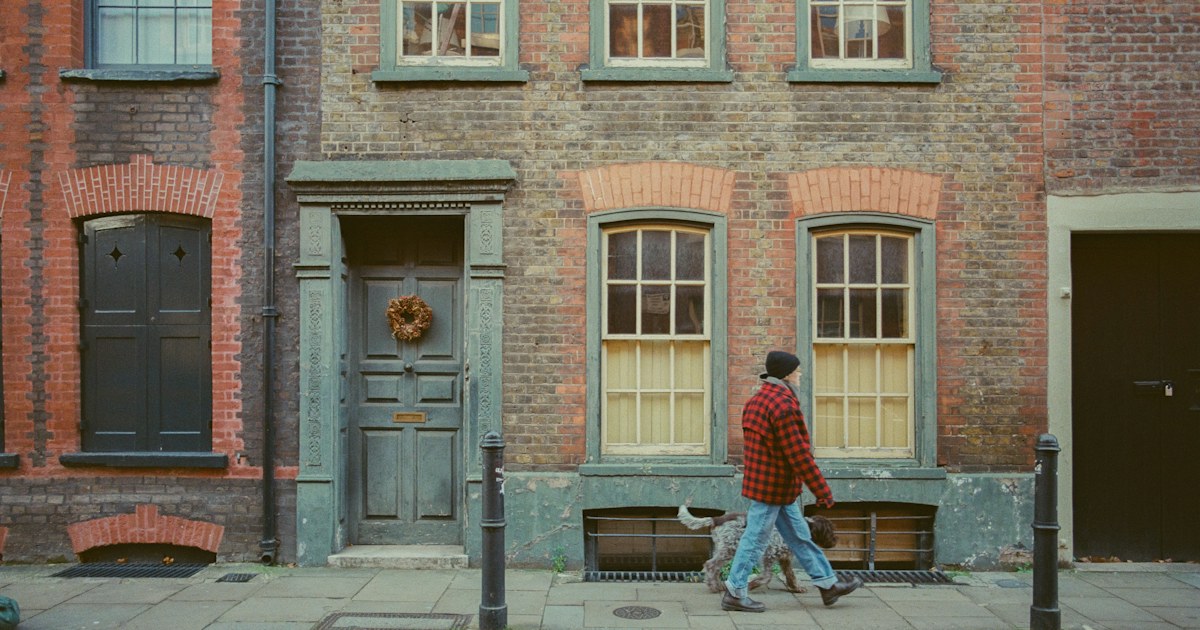
It is Thursday afternoon. You go to put the bins out and realise it is the first time your feet have touched the pavement since Monday.
You are not unhappy, exactly. You like working from home. You would not go back. But the week has been one long room: bed, kettle, desk, sofa, bed.
You are not lazy, and nothing has gone wrong with you. The office gave you reasons to leave every day, and home gives you none.
The usual explanation is discipline. You should get dressed properly, set an alarm, make yourself go for a run. That puts the whole job on willpower, at the exact moment willpower is busy with everything else. It is the wrong place to look.
The office gave you reasons to leave, and home gives you none
Think about what got you out of the door on an office day. Not motivation. The train left at 8:12 am. Lunch was a sandwich from the place downstairs. At 5:30 pm you went home because the building was emptying.
None of those were decisions. They were reasons, handed to you by the shape of the day.
At home every one of them disappears. There is no train, lunch is in the fridge, and there is nowhere to go home to. So going out turns from something that happens into something you have to decide, every single day. And a choice you make every day, with nothing pushing you, is a choice you will often skip.
Reasons the workday gives you to go out
- The commute in
- Lunch out
- The way home
- The commute in
- Lunch out
- The way home
- One reason, on purpose, before noon
This is also why the advice to go outside more does not land. You already know. Knowing is not the missing piece. A reason is.
It is the most common struggle remote workers name
You are in large company.
Buffer surveyed 3,000 remote workers in late 2022 for its State of Remote Work 2023 report and asked each one for their single biggest struggle. The most common answer, at 21%, was staying home too often because they did not have a reason to leave. Loneliness came second at 15%.
The same people were not unhappy with remote work. 98% of them wanted to keep working remotely, at least some of the time, for the rest of their careers.
Remote workers, asked for their one biggest struggle
A survey, not a sample of everyone- Staying home too often, with no reason to leave21%
- Loneliness15%
- Working across time zones14%
- Staying motivated11%
- Not being able to unplug11%
It is worth being clear about the limits. Buffer’s survey is of people who chose to answer it, most of them people who already like remote work, so it is not a picture of every remote worker. But that is what makes the result interesting. These are the people who are best at working from home, and not leaving the house is still the thing they struggle with most.
You can love working from home and still notice you have not been out since Monday. Both are true at once.
What staying in quietly costs you
Not leaving the house is not a crisis. It just takes a few things out of the day that you used to get for free, and you notice them only as a vague flatness by Thursday.
Morning light
The walk to the station was a dose of daylight you never thought about.
Mariana Figueiro and colleagues at the Lighting Research Center gave 109 office workers in five US government buildings a calibrated light meter to wear for a week, in winter and again in summer, and published the results in Sleep Health in 2017. People who got more light in the morning fell asleep faster, especially in winter, and reported better sleep. People who got more light across the whole day also reported less depression.
It was an observational study of office workers, not a test on people at home, so it shows a link rather than proving that the light did it. But the direction matters for a home worker. A desk in a back room in November gets very little morning light, and a ten minute walk outside gets far more than any lamp.
Moving
The second thing is movement.
In a small randomised trial published in BMJ Open in 2016, Wennberg and colleagues had the same 19 adults spend two long days in a lab: one sitting straight through, one getting up for three minutes of light walking every half hour. On the walking day they reported less fatigue. The trial was small and everyone in it was aged 45 to 75 and overweight, so it is not a prescription. But it fits what you feel by mid afternoon after a day that never left the chair, and why working from home makes you so tired goes further into it.
Other people, even ones you barely know
The third thing is people. Not friends. The other ones.
Natalia Emanuel, Emma Harrington and Amanda Pallais, writing in Science in June 2026, compared more than half a million American workers between 2011 and 2024. Remote workers spent about an extra hour alone each working day, and did not make it up in the evening. The effect was concentrated among people who also lived alone.
Gallup found the same pattern from another angle. In a survey of nearly 20,000 US workers in February 2024, 25% of fully remote employees said they had felt lonely a lot of the previous day, against 16% of people working on site.
Felt lonely a lot of the previous day
A link, not proof- Fully remote25%
- Hybrid21%
- On site16%
Both are links, not proof that remote work makes anyone lonely. People who choose to work remotely may differ in other ways. But the contact that disappears is mostly small. Gillian Sandstrom and Elizabeth Dunn, in Personality and Social Psychology Bulletin in 2014, found that people felt happier and more like they belonged on days when they had more contact than usual with acquaintances, not only close friends. The barista who knows your order counts. The office was full of those people, and home has none. We wrote more about why the loneliness of working from home is not about friends.
Give yourself a reason, not a rule
The fix is not more discipline. It is putting back the thing the office did: a reason to go out that does not depend on how you feel that morning.
A rule says “go for a walk every day”. A reason says “the coffee is at the café, so that is where I get it”. Rules need willpower. Reasons just need to exist.
The reasons that people who work from home actually use:
- The same short walk before the laptop opens. Round the block, to the end of the road and back. It starts the day the way the commute did, and it gets you morning light. The same route every day means there is nothing to decide.
- An errand at lunch. Buy lunch instead of making it, post the parcel, get the bread. Anything with a shop at the end of it.
- One morning a week somewhere else. A café, a library, a coworking day pass. Bring the work that needs the least.
- A class or group at a set time. A running club, a choir, a language class. The point is less the activity than being somewhere people start to know your face, and notice when you are not there.
- A dog, if it fits your life. Not as a fix, just as the most reliable reason ever invented. Nobody has to persuade a dog owner to go out at 7 am.
You do not need all of these. You need one that you keep.
Two small constraints make it stick. Put it before noon, because the afternoon belongs to whatever the morning did not finish, and an errand planned for 4 pm usually becomes an errand for tomorrow. And attach it to something that already happens, like the first coffee or the end of the first call, so it does not need a slot of its own.
Days you went out before noon
- Mon
- Tue
- Wed
- Thu
- Fri
- Sat
- Sun
- Mon
- Tue
- Wed
- Thu
- Fri
- Sat
- Sun
If what has kept you in lately is more than habit, if you feel low for weeks, or going out has started to feel hard in a way it did not before, that is worth taking to a doctor or a therapist rather than to a list. It is a different thing, and a real one.
If your partner never leaves the house
Sometimes the person searching for this is not the one staying in. It is the one who comes home and finds their partner exactly where they left them.
The temptation is to point it out. It rarely helps. Being told you should go out more feels like being told you are doing working from home wrong, and it turns their day into your project.
What tends to work better is an invitation, not an instruction:
- Ask them to come on a walk you are already taking, at a time that suits their workday.
- Make one small thing shared: the coffee run, the trip to the shop, a lunch out on Fridays.
- Let it be ordinary. No lecture, no talk about their wellbeing, just a reason to be out together.
And if you are worried that it is more than habit, say so gently, once, and suggest they talk to someone who can actually help.
The one thing to try tomorrow
Pick one reason to leave the house before noon. The same one, every workday.
Not a programme. Ten minutes to the corner shop, a lap of the park, the café for your first coffee. Whatever has a destination and fits the day you actually have.
Flowdayz is about finding the few small things like this that actually change your day at home. Take the two minute workday check to see which ones matter most for yours. If your days also tend to run on into the evening, the walk works as an ending too: it is the same move as switching off from work at home.
The building used to decide when you went out. Now you do, and one reason a day is enough.
Questions people ask
Is it normal to never leave the house when you work from home?
It is very common. In Buffer's 2023 survey of 3,000 remote workers, staying home too often because there is no reason to leave was the most picked single biggest struggle, at 21%. It does not mean anything is wrong with you. It means the day no longer contains a reason to go out, so you have to add one.
How do I get out of the house more when I work from home?
Give yourself a reason, not a rule. A short walk before the laptop opens, an errand at lunch, one morning a week in a café or library, a class where people start to know your face. Pick one and attach it to the same time every workday, ideally before noon, so it happens before the day fills up.
How often should you leave the house when working from home?
There is no study that gives a number. A sensible floor is once every workday, even for ten minutes, because that is roughly what the commute and lunch used to give you. Going out in the morning has the extra benefit of daylight, which has been linked to better sleep in office workers.
My partner works from home and never leaves the house. What can I do?
Invite rather than instruct. Ask them to come on a walk you are already taking, or to fetch the coffee together at a set time. A shared habit is easier to keep than advice, and it does not turn their workday into your project. If you think something more is going on, like low mood that lasts for weeks, gently suggest they talk to a doctor.
Is staying home all day bad for you?
The honest answer is that it depends on what the day leaves out. Long stretches of sitting, little morning light and no contact with other people are each linked to feeling worse, and a day that never leaves the house tends to have all three. If staying in comes with low mood, anxiety about going out, or it has lasted a long time, a doctor or therapist is the right next step, not a blog.
One small thing a week.
A short email with one idea for your workday at home, and how sure the science is. No noise. Leave any time.