20 August 2026 · 5 min read · Updated 31 August 2026
Most of the morning routine is decoration.
The twelve-step morning routine is mostly unproven. Two parts of it, daylight and water, have real research behind them. What that leaves you to actually do.
You watched the video twice. Cold plunge, a tongue scraper, ten minutes of journalling, a walk before the sun is properly up, a protein shake, fifteen minutes of stretching, no phone until the list is done. Nine steps, ninety minutes, and the person doing it looks entirely unbothered by the cost of any of it.
You tried it on a Monday. By Wednesday the cold plunge had become a cold shower you resented, the journal had one entry, and the whole thing had quietly stopped, the way these things do, without a decision ever getting made about it.
The obvious conclusion is that you lacked the discipline the person in the video has. That conclusion is wrong on a specific, checkable point: most of those nine steps were never shown to do anything in particular for how your day goes. You did not fail a system. You abandoned a costume, and the two parts of it that were actually doing work were never the ones getting the screen time.
Why the whole stack gets credit for what two steps do
A routine filmed as one continuous sequence reads as one claim: do all of it, in this order, and the calm on screen is what you get. Nothing about the format lets you see which step is carrying the effect and which step is just there because it looked good next to the others.
That matters because the genre borrows its authority unevenly. Somewhere in most versions of this routine is something with genuine research behind it, usually daylight, sometimes water. Stitched next to it are steps that feel adjacent to wellness without having been tested for the thing being implied, that they will make your day better, your mood steadier, your focus sharper. The filmed version cannot tell you which is which. It was never trying to.
A realistic morning routine needs two things, not twelve
Two parts of the stack hold up against an actual paper rather than a claim repeated until it sounds established.
Daylight, early, does more than almost anything else on the list. A UK Biobank study of over 400,000 people, ages 37 to 73, found each additional hour spent in daytime outdoor light was associated with lower odds of lifetime major depressive disorder and antidepressant use, less frequent anhedonia and low mood, and greater happiness, independent of demographic and lifestyle factors (Burns, Saxena, Vetter, Phillips, Lane & Cain, Journal of Affective Disorders 295, 2021). The same data linked more outdoor light to easier waking and fewer insomnia symptoms. It is observational, not a trial, so it shows a strong association rather than proof that the light itself caused the difference. But the analyses behind it ranged from about 142,000 people for the depression outcome to over 450,000 for others, not a small filmed sample of one.
Water, before the coffee, does something too, measurably if modestly. In a controlled trial, 22 habitual high-volume drinkers had their intake cut from roughly two and a half litres a day to one litre for three days, and their mood measurably worsened: less contentment, less calm, fewer positive emotions. In the same trial, 30 habitual low-volume drinkers increased their intake the other way, and fatigue and confusion measurably dropped (Pross et al., PLOS ONE 9(4), 2014). Worth knowing before leaning on it too hard: 52 healthy young adults, 41 women and 11 men, three days, unblinded, run in a controlled inpatient setting rather than an ordinary week. There was no control group held in the same conditions without the water change, and the POMS depression subscale did not move significantly in either group. It was also funded by Danone Research, with three of the eight authors employed there and the rest at Forenap, the contract research organisation that ran the trial. That is worth saying out loud rather than burying, because it is the same test this post is applying to everything else: who paid, and what were they hoping it would show. Small, short, funded by a company with an obvious interest in the answer. Still a real intervention, not an assumption dressed as one.
Neither finding says the other seven steps are wrong to enjoy. It says they are not the reason the person in the video looks calm. That reason is mostly the two things nobody bothered to film for very long, because a glass of water and an open curtain make for a boring nine seconds of footage.
What to actually do with a normal morning
Two constraints, not a sequence.
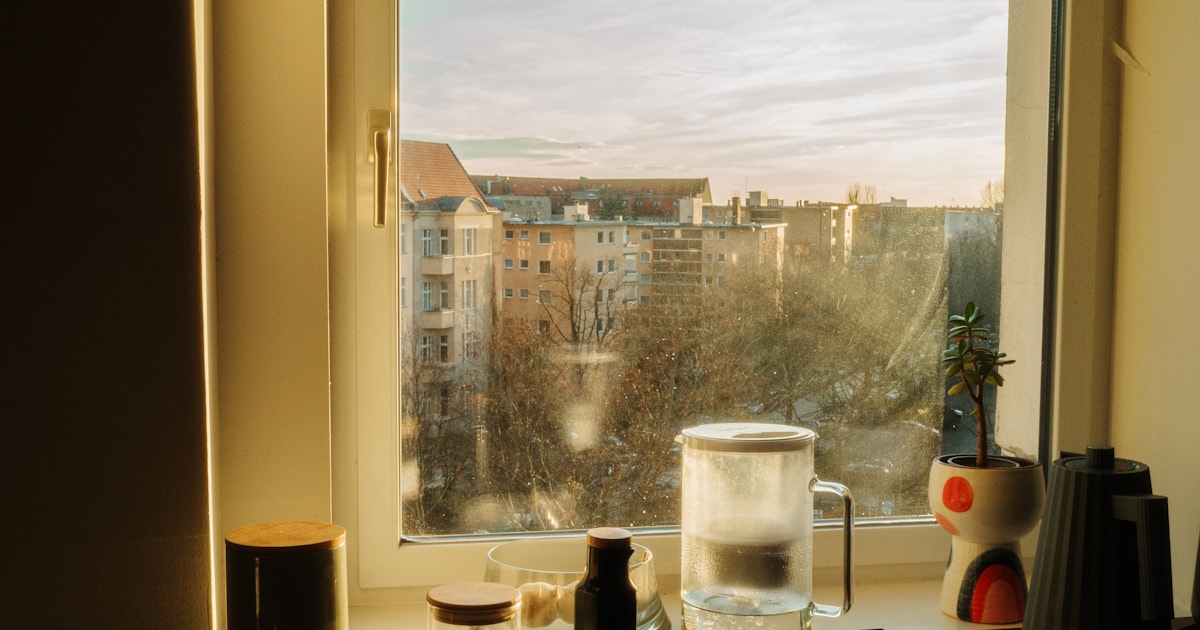
Get some daylight within roughly the first hour you are up. It does not need to be a walk. Standing at an open window while the kettle goes counts.
Drink a glass of water before the first coffee, not instead of it.
Twelve steps do not make the morning correct. Two of them do most of the work, and the other ten are the costume.
That is close to the whole of it. If a third thing genuinely fits, anchor it to a moment that already happens without needing willpower to arrive, rather than adding it to a list that is already longer than the morning has patience for. Flowdayz shows one thing a day for exactly this reason: not because more steps are wrong, but because most of what gets stacked onto a morning was never carrying its own weight.
The version of you at 6am on a Wednesday does not need nine steps performed in order. It needs the two that were doing something, and permission to skip the rest without calling it failure.
Questions people actually ask
- What should a realistic morning routine actually include?
- Two things with real evidence behind them. Some daylight, ideally within the first hour you are up, and water before the first coffee. Everything else in the popular longer version, cold exposure, a supplement stack, a scripted gratitude practice, is either unproven for the specific claims made about it or borrowed from research that was not about mornings at all.
- Does morning sunlight actually improve mood, or is that just folk wisdom?
- It has real evidence behind it. A UK Biobank study of over 400,000 people found each additional hour spent in daytime outdoor light was associated with lower odds of major depressive disorder, less frequent low mood, and greater happiness (Burns et al., Journal of Affective Disorders, 2021). It is an observational study, so it shows association rather than proof, but the pattern held across a very large sample.
- Does drinking water first thing in the morning really do anything?
- There is a real, if small, trial behind it. When 22 habitual high-volume drinkers cut their intake to a litre a day for three days, their mood measurably worsened, less contentment, fewer positive emotions. When 30 low-volume drinkers increased theirs, fatigue and confusion measurably dropped (Pross et al., PLOS ONE, 2014). The trial was short, unblinded, mostly though not only women (41 of the 52), and funded by Danone Research, worth knowing before leaning on it too hard, but it is an actual intervention rather than an assumption.
- Do I need a full morning routine to have a good day?
- No. The evidence supports two specific actions, not a sequence of nine or ten. A short list you actually keep beats a long one you perform for three days and quietly abandon.
- What about cold plunges, tongue scraping, and supplement stacks in a morning routine?
- They might do something for some people. There is no comparable body of evidence behind any of them the way there is for daylight and hydration, and stacking unproven steps on top of proven ones is exactly how a two-minute morning becomes a ninety-minute one that nobody keeps up past the first week.
Keep reading
The autumn slump has a timetable
The routine that worked all summer was cued by daylight. Daylight leaves faster in autumn than at any other time of year, and it takes the cue with it.
Read itYou will keep the one you enjoy
September is the other resolution season, and the list gets picked from the wrong column. Usefulness predicts what you start. Enjoyment predicts what you keep.
Read it
- morning routine
- routines
- habits
- daylight
Make every day your best day.
Flowdayz is a feel good app. You learn what actually makes you feel good, usually the smallest things, and get there every day, around the life you already have.